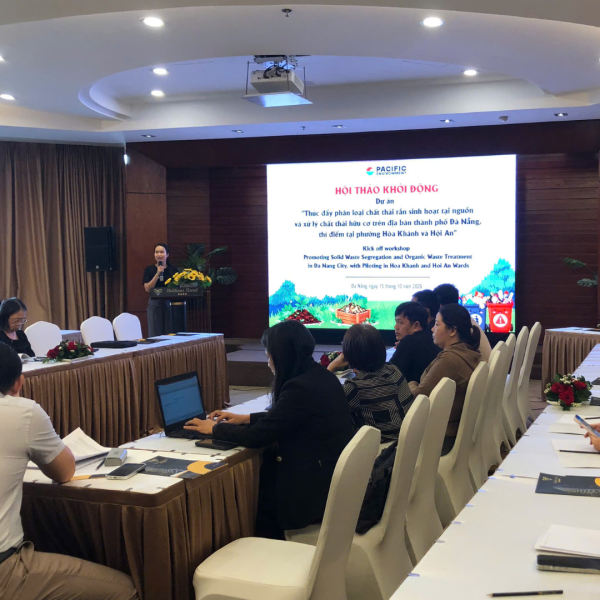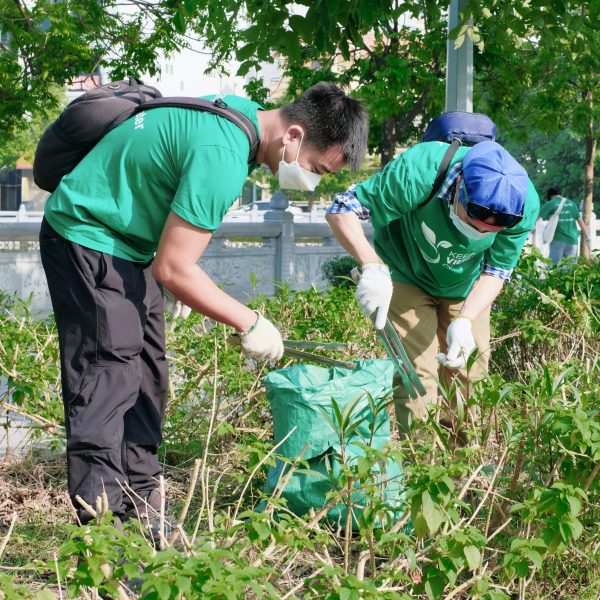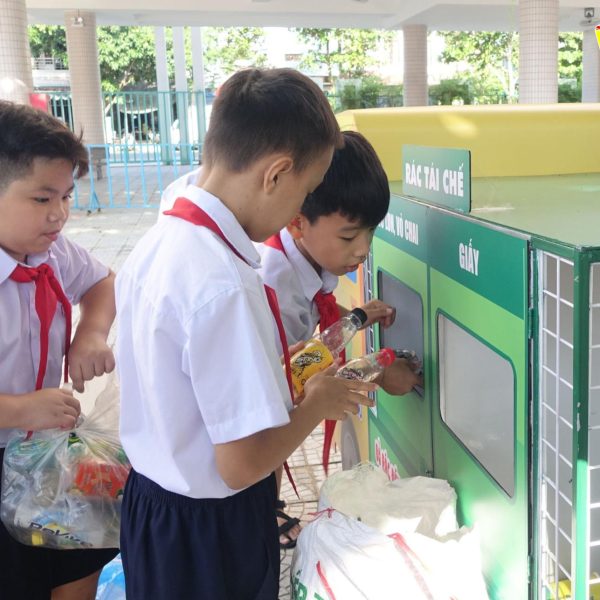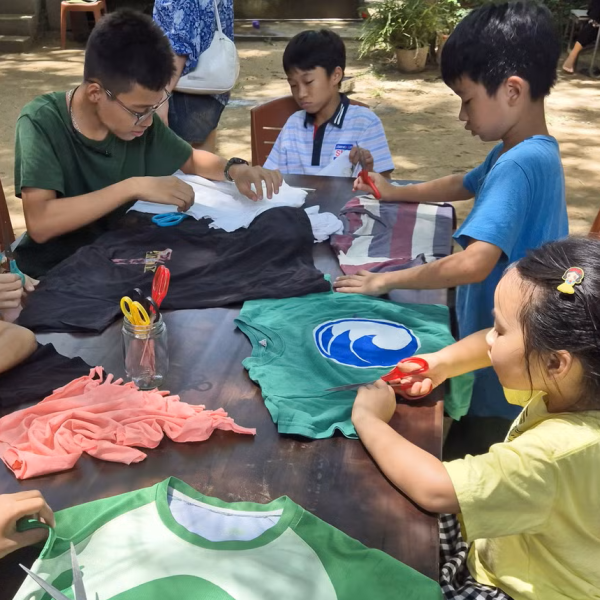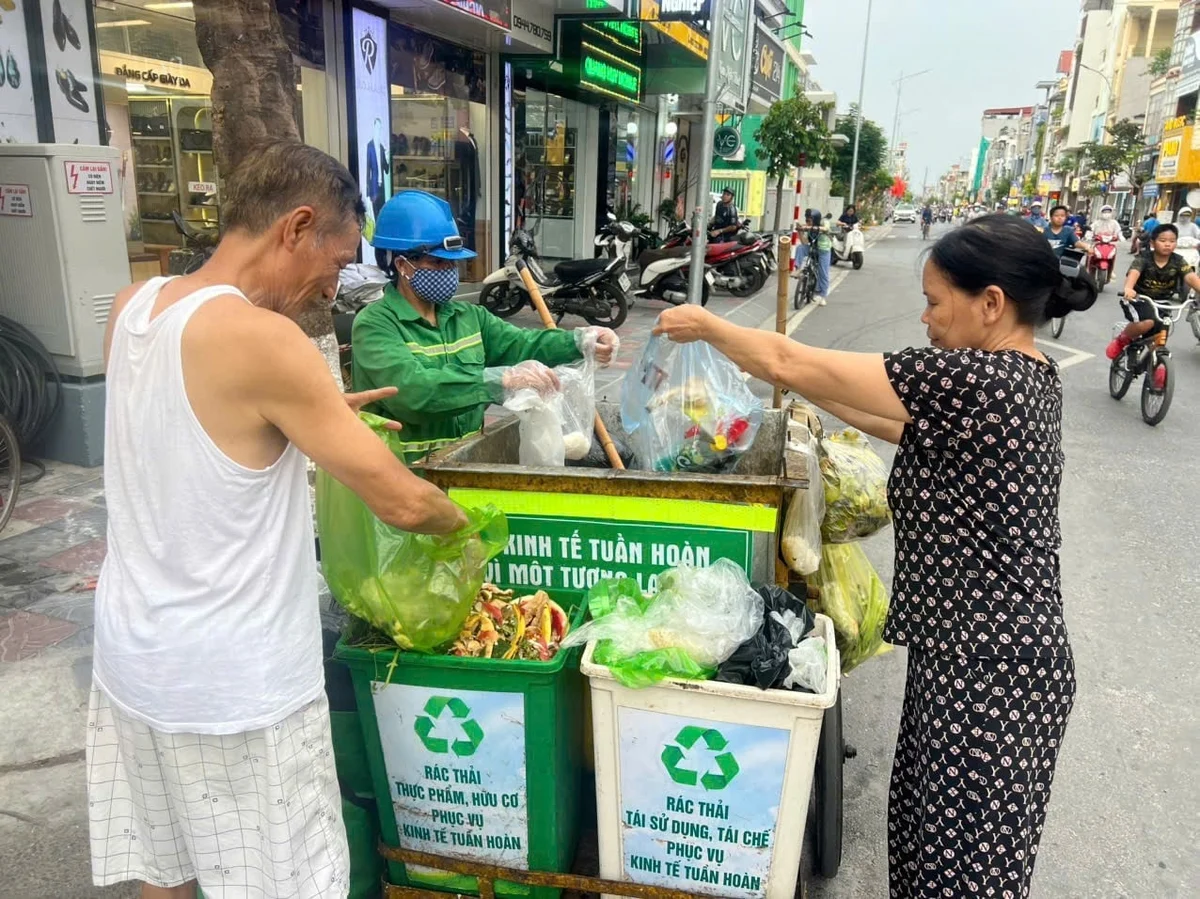
Waste sorting at source is gradually becoming a common practice among households across Hai Phong City. Beyond helping create cleaner and greener neighborhoods, this initiative is opening new pathways for sustainable waste management by transforming waste into valuable resources that support the circular economy and sustainable development.
To achieve these positive outcomes, Hai Phong has mobilized local authorities, community organizations, and residents in extensive awareness-raising efforts on environmental protection. Communication activities have been carried out through various channels, including leaflet distribution, community meetings, and regular reminders on proper waste segregation practices. As a result, public awareness and responsibility toward environmental protection have improved significantly. Many households now actively separate their waste at the point of generation, reducing the amount of waste requiring conventional treatment and disposal.
Residential Group No. 44 in Cầu Tre Ward is one of the city’s leading examples. With more than 400 households, the area has achieved a participation rate of over 90% in waste sorting. Citizens express that separating waste has become a routine part of their daily lives.
Alongside community engagement, waste collection and transportation systems have also been strengthened to ensure the effectiveness of source sorting efforts.
As the city’s primary provider of public sanitation and environmental services, Hai Phong Urban Environment One-Member Co., Ltd. has invested in specialized equipment and vehicles to separately collect and transport different waste streams. The company also works closely with local authorities and community groups to guide residents on proper waste disposal schedules and designated collection points.
Beyond collection, the company is gradually advancing a circular economy model by optimizing waste treatment and recycling processes at its facilities. Once sorted, waste is processed through appropriate treatment pathways to generate useful products. Organic waste is converted into high-quality compost for agricultural use; bulky waste is shredded and repurposed as fuel material; and plastic waste is compressed into large bales before being transferred to recycling facilities, where it can re-enter the production cycle.
These efforts not only reduce the amount of waste sent to landfills but also help conserve natural resources, lower greenhouse gas emissions, and improve resource efficiency across the economy.
Source: Vietnam Agriculture Newspaper (Báo Nông nghiệp và Môi trường)